

Beyond Your Smile: How Your Oral Health Directly Impacts Your Heart, Blood Sugar, Lungs & Longevity
The connection between your mouth and the rest of your body has been recognized for a long time. For years, doctors and dentists worked separately, but that's changing. We now know that your mouth isn't just a separate thing; it's a main entry point to your whole body.
Key Clinical Takeaways: The Mouth-Body Connection (TL;DR)
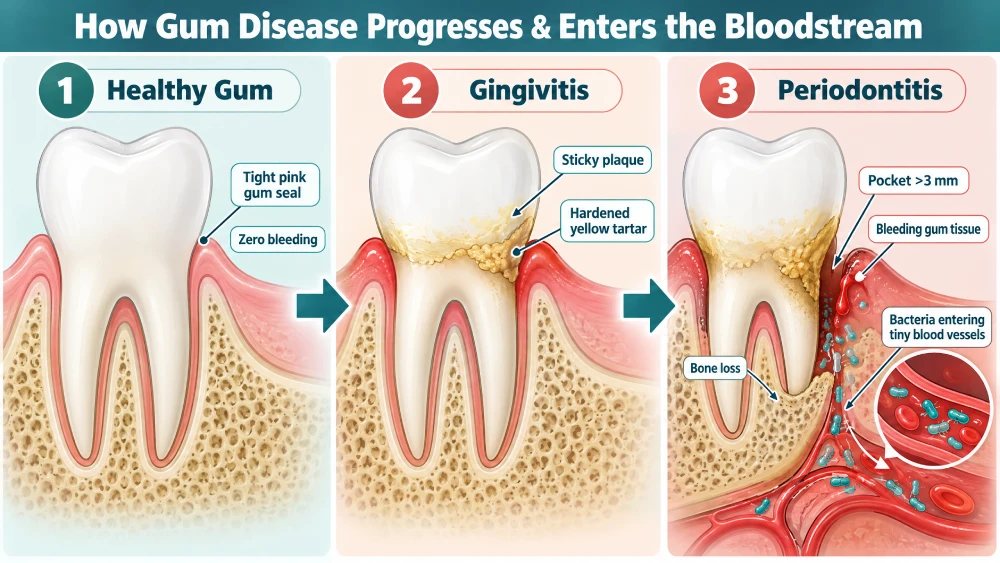
- Your mouth is a gateway to your bloodstream: Untreated plaque and tartar trigger gingivitis and periodontitis, creating deep, bleeding gum pockets that allow bacteria to enter your circulation.
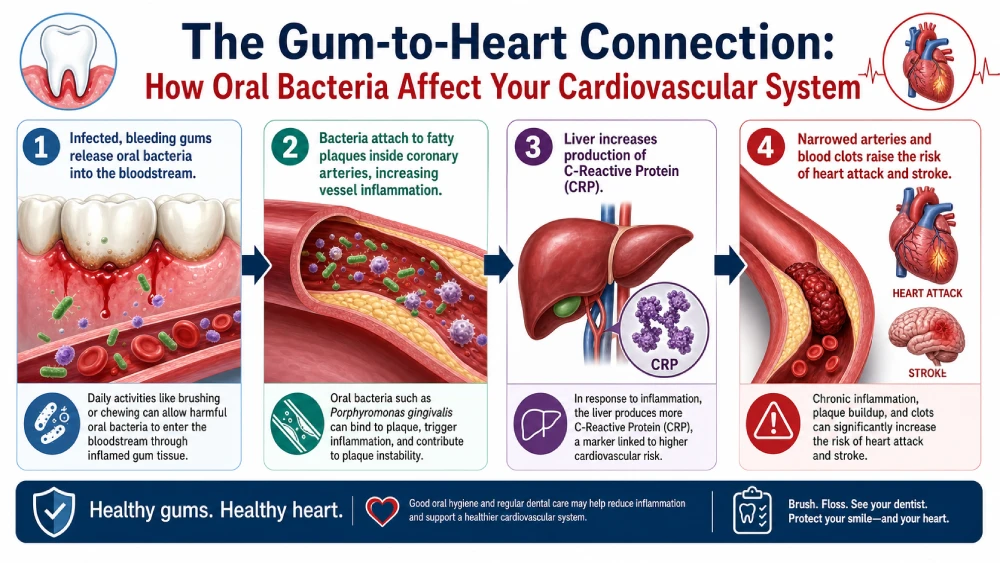
- Heart & Stroke Risk: Oral bacteria in the bloodstream can attach to arterial plaques and raise C-reactive protein (CRP), increasing blood vessel inflammation, high blood pressure, heart attacks, and strokes.
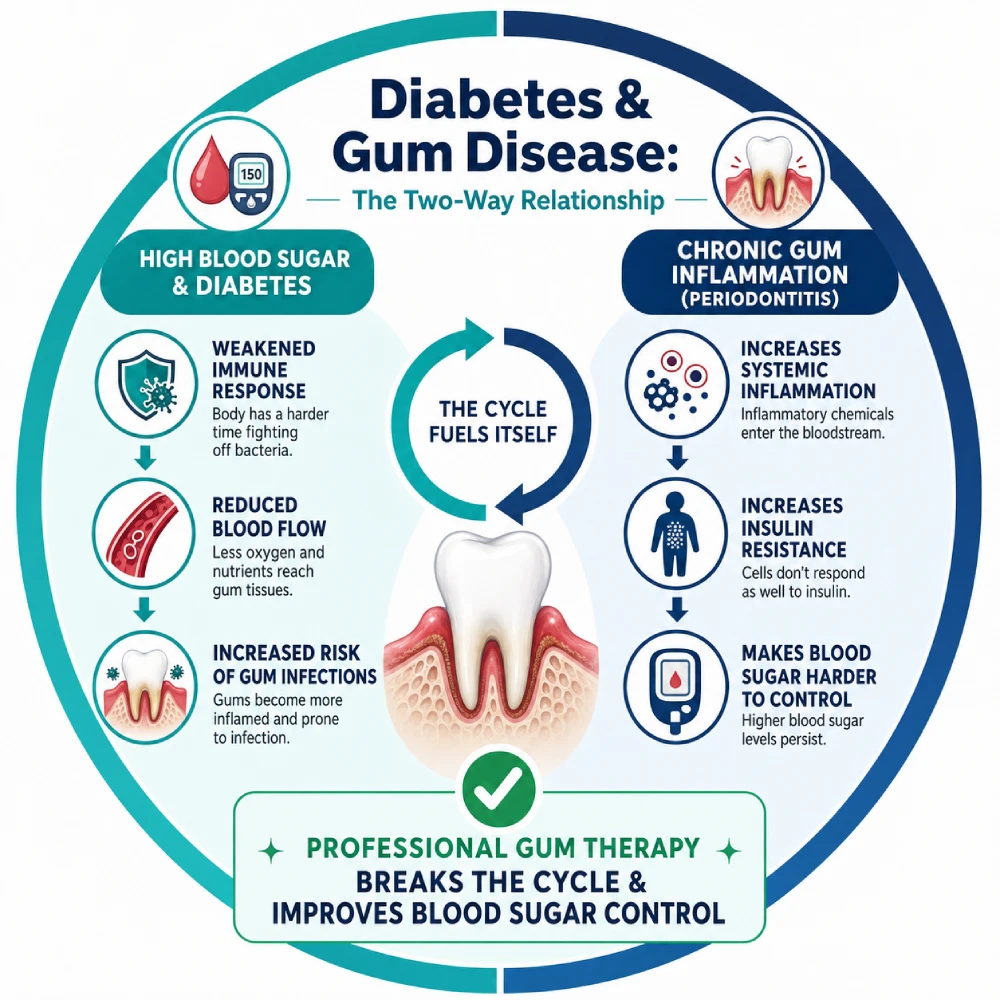
- Two-Way Diabetes Link: Diabetes weakens gum immunity, while chronic gum inflammation causes insulin resistance-making blood sugar harder to control until gum disease is treated.
- Lung & Pregnancy Protection: Inhaling oral bacteria raises pneumonia risk, and untreated periodontitis during pregnancy is linked to premature birth and low birth weight.
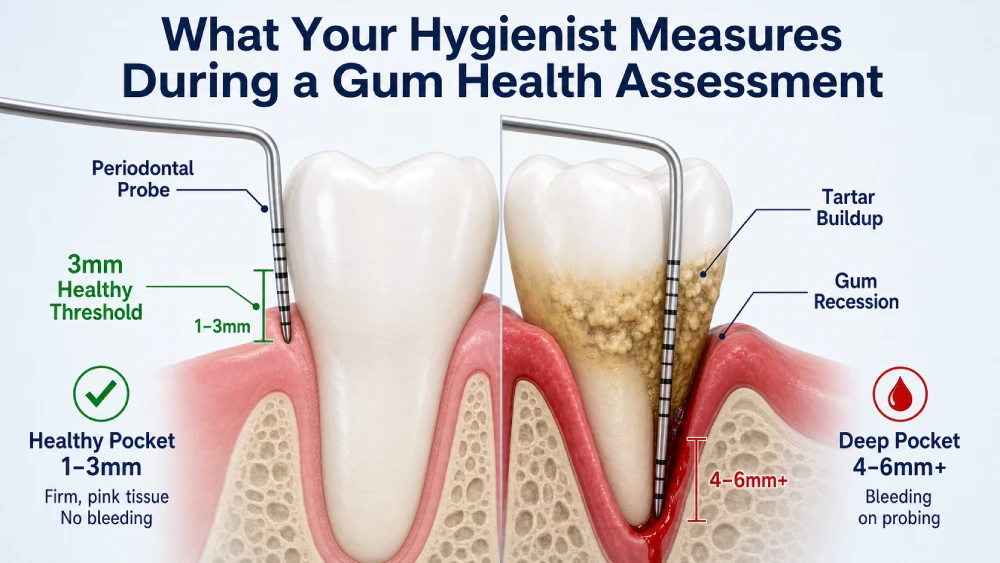
- Early Detection Stops Inflammation: Periodontal probing (checking for pockets deeper than 3mm) and ultrasonic hygiene therapy stop gum infections before they affect your organs.
The connection between your mouth and the rest of your body has been recognized for a long time. For years, doctors and dentists worked separately, but that's changing. We now know that your mouth isn't just a separate thing; it's a main entry point to your whole body.
Here at Smile Care Studio, we see oral care as crucial for your overall health, not just for your smile. Understanding how the bacteria in your mouth affect your organs is key to feeling truly well. We'll look at how gum problems can impact your heart, blood sugar, and breathing, and why taking care of your teeth is so important for living a longer life.
From Plaque to Periodontitis: How Mouth Bacteria Enter Your Bloodstream
Your mouth has a lot of different bacteria, viruses, and fungi. Most of these are fine and even help with digestion and protection. But you need to keep things clean. If you don't brush and floss regularly, or eat too many sugary and acidic foods, the bad bacteria can take over.
These bad germs form a sticky film called plaque on your teeth. If you don't remove it daily, it hardens into tartar. Tartar is a tough spot for bacteria to hide, right against your gums, and it makes your body react-which is why routine professional teeth cleaning and tartar removal is essential.
When plaque and tartar stay on your gums, it causes gingivitis, making your gums red, swollen, and bleed easily. If you don't get a cleaning, this can turn into periodontitis, or advanced gum disease.
This is when your overall health starts to be affected. The infection causes your body to fight back with inflammation. This inflammation breaks down the tissue and bone holding your teeth, creating deep, infected pockets. These pockets have many blood vessels. When your gums bleed, it means bacteria and inflammatory stuff can get into your bloodstream and travel to your organs, requiring targeted deep cleaning and periodontal therapy to stop the infection below the gumline.
How Gum Disease Impacts Your Heart, Arteries & Stroke Risk
A strong link has been found between bad gum disease and heart problems. Studies show people with chronic gum issues are more likely to have heart attacks and strokes.
Mouth bacteria that get into your blood can stick to the fatty plaques in your arteries. This makes the inflammation in your blood vessels worse, leading to stiffer, narrower arteries. These bacteria can also make your liver produce more C-reactive protein, a marker for inflammation that increases the risk of blood clots. When a clot blocks an artery, it causes a heart attack or stroke.
Diabetes and Gum Health: A Complex Two-Way Relationship
Diabetes and gum health have a complex, two-way relationship. People with diabetes are more prone to gum infections because their immune systems and blood flow are weaker.
But gum disease also makes it harder for diabetics to control their blood sugar. The constant inflammation from gum problems causes insulin resistance, meaning your body doesn't use insulin well and sugar stays high in your blood. Taking care of your gums-and knowing how often you should get your teeth cleaned if you have diabetes or gum disease-can lead to better blood sugar control.
How Mouth Bacteria Affect Your Lungs and Pregnancy
Breathing & Lung Infections
Mouth bacteria can also affect your lungs and pregnancy. When you breathe, you can inhale saliva from your mouth. If you have bad gum disease, you're breathing in those harmful bacteria, increasing the risk of lung infections like pneumonia, especially if your immune system is weak.
Pregnancy Gingivitis & Baby Health
Pregnant women need to be extra careful about their oral health. Hormones can make gums more sensitive, leading to pregnancy gingivitis. If this becomes periodontitis, it can harm the baby. The inflammation can reach the amniotic fluid and may cause premature birth or low birth weight. Getting your gums checked early in pregnancy is important for both mother and baby.

Summary Table: How Gum Disease Impacts Your Body Systems
| Body System / Life Stage | How Oral Bacteria & Inflammation Act | Potential Health Risk |
|---|---|---|
| Heart & Blood Vessels | Bacteria stick to arterial plaques & stimulate liver C-reactive protein (CRP) | Narrowed arteries, high blood pressure, blood clots, heart attack & stroke |
| Blood Sugar & Metabolism | Chronic periodontal inflammation triggers systemic insulin resistance | Worsened blood glucose control & two-way diabetes progression |
| Lungs & Respiratory Tract | Aspiration (inhaling) of saliva droplets carrying periodontal bacteria | Increased risk of respiratory infections & bacterial pneumonia |
| Pregnancy & Baby | Hormonal sensitivity (pregnancy gingivitis) & inflammatory spread to amniotic fluid | Higher risk of premature birth & low birth weight |
Protecting Your Whole Body Starts With Preventive Oral Hygiene
The good news is that preventing these serious health issues starts with good preventive dental hygiene care. You can control the amount of bacteria entering your bloodstream. By taking care of your teeth and gums, you're protecting your heart, metabolism, and lungs.
At Smile Care Studio, we focus on preventing and treating the infections that can harm your overall health. As an independent dental hygiene clinic in Thunder Bay, our hygienists have the time and tools to thoroughly check your gums, find early signs of inflammation, and treat infections before they spread. We do more than just clean teeth; we provide essential health maintenance. We also provide personalized oral hygiene education on how to keep your mouth healthy between visits.
Explore Whole-Body Dental Hygiene Services in Thunder Bay
Frequently Asked Questions About Gum Health & Your Body
Because the link between dental care and overall health is still new to many, people often have questions. Here are some common ones:
1. Are bleeding gums normal when brushing or flossing?
No, bleeding gums are not normal. They signal an active infection. Healthy gums don't bleed with gentle brushing or flossing. If your gums bleed, it means inflammation has broken the barrier, and bacteria are getting into your blood. See a dental professional right away if this happens.
2. Can treating gum disease help lower your blood pressure?
Yes, treating gum disease can help lower your blood pressure. Chronic gum disease causes constant inflammation, damaging your blood vessels and making them less able to relax, which raises blood pressure. Treating the gum infection reduces this inflammation, improving blood vessel function and often lowering blood pressure.
3. How does a dental hygienist assess your gum disease and overall health risk?
Your hygienist looks at several things to assess your risk during a comprehensive Gum Health Assessment. The most important is periodontal probing, measuring the depth of pockets between your teeth and gums. Pockets deeper than three millimeters that bleed are a major concern. We also check for tartar buildup, loose teeth, and gum recession. Combining this with your medical history helps us create a plan to protect your overall health.
Take Control of Your Gum Health Today
Your oral health reflects your overall health. Letting gum problems continue is a risk to your long-term health and quality of life.
You can stop this inflammation. By working with Smile Care Studio, you get a team that sees dental care as a vital part of your health strategy. We provide a comfortable setting and modern hygiene techniques to keep your mouth healthy. Don't wait for a medical problem to start focusing on your health. Contact us today for a gum health assessment to protect your smile, your organs, and your well-being.